View Report
State of Compliance in Higher Education Report
.svg)
On March 18, don’t miss Build to Win, Apptega’s spring launch event for teams ready to assemble differentiated security, risk, and compliance services.
We’re unveiling:
See how the right pieces, powered by automation and AI agents, can come together to elevate what you deliver. Grab your spot before registration fills up.

Looks like you’re getting a lot out of our resources — awesome! Want to get even more tailored insights that fit your specific needs? Let’s book a discovery call so we can help you achieve your goals faster.
Higher education institutions are being asked to manage growing compliance expectations within increasingly complex environments. See how 112 security, compliance, IT, audit, and risk leaders are navigating these demands, where the greatest operational challenges remain, and what the data reveals about the future of higher education compliance.
Apptega and CampusGuard surveyed 112 U.S. higher education security, compliance, IT, audit, and risk leaders to establish a new benchmark for how colleges and universities manage compliance. The research reveals where institutions are feeling the greatest operational pressure and how differences in governance, processes, technology, and external support are associated with markedly different compliance outcomes.

How are institutions navigating overlapping regulatory requirements, and how much work is being duplicated across them?

How are institutions structuring compliance, and where are governance, systems, and manual processes affecting team capacity?

How prepared are institutions when an audit arrives, and how confidently can they demonstrate compliance posture and progress?

What does the data reveal about the approaches associated with less manual work, stronger audit readiness, and greater confidence?
manage four or more frameworks or regulatory requirements.
report moderate to significant overlap across frameworks.
rely on spreadsheets as their primary compliance system of record.
say their teams spend more than half their time on manual compliance work.
describe their compliance process as reactive or periodic.
are no more than moderately confident in answering whether they are compliant and how they know.
do not currently use an external provider but are considering one.
say a provider’s technology stack is very important or critical when evaluating external support.
OVERLAPPING REQUIREMENTS ARE STILL LEADING TO REPEATED WORK
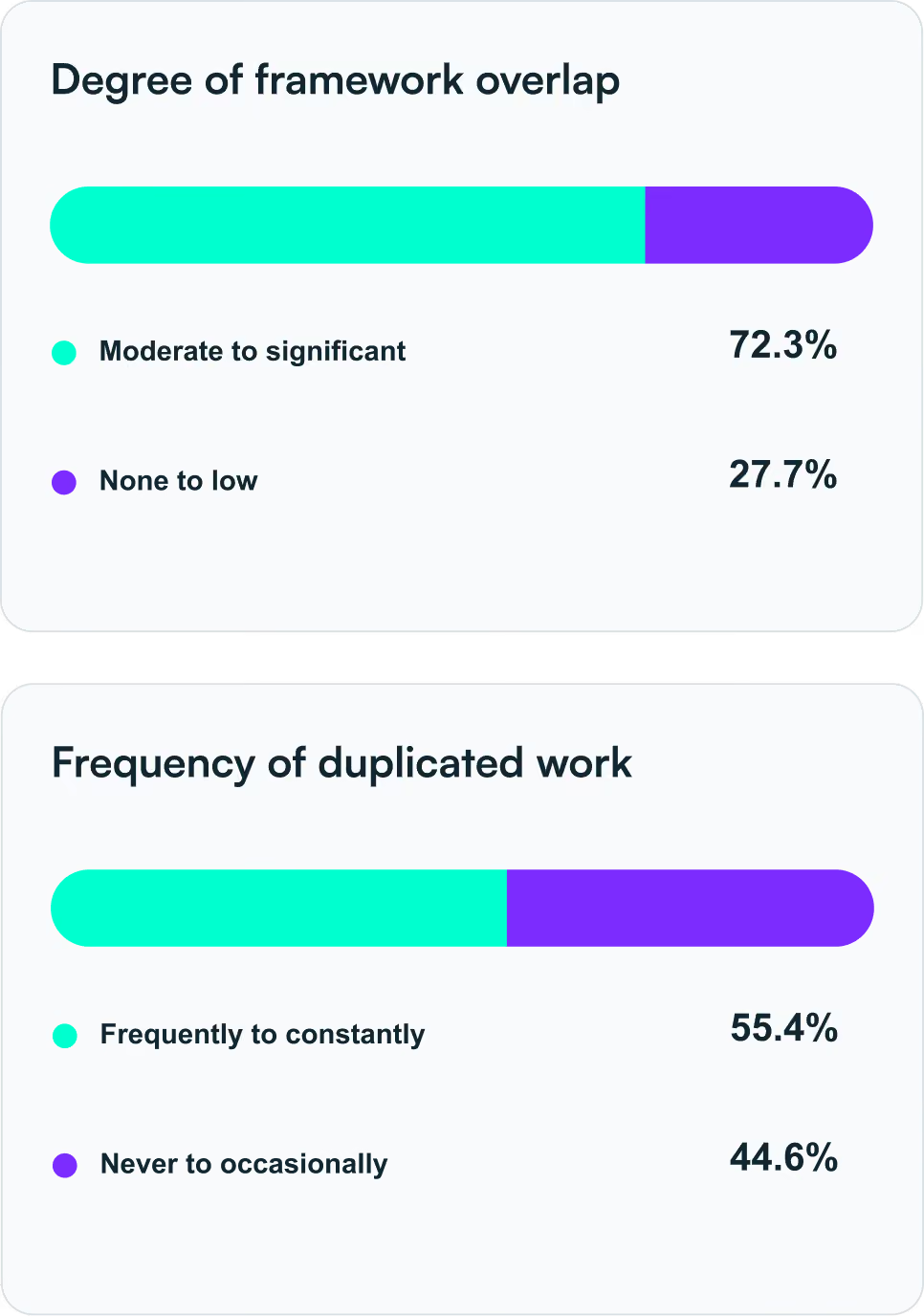
Higher education institutions are managing more than individual frameworks - they're managing the complexity created when multiple requirements converge. More than half of respondents manage four or more frameworks or regulatory requirements, while 72.3% report moderate to significant overlap across them.
Yet that overlap isn't necessarily translating into efficiency: 55.4% frequently or constantly duplicate work across frameworks or audits.
The findings point to an opportunity for institutions to standardize common processes, reuse controls and evidence, and manage overlapping requirements more efficiently.
TWO-THIRDS OF INSTITUTIONS STILL RELY ON SPREADSHEETS AS THEIR PRIMARY SYSTEM OF RECORD
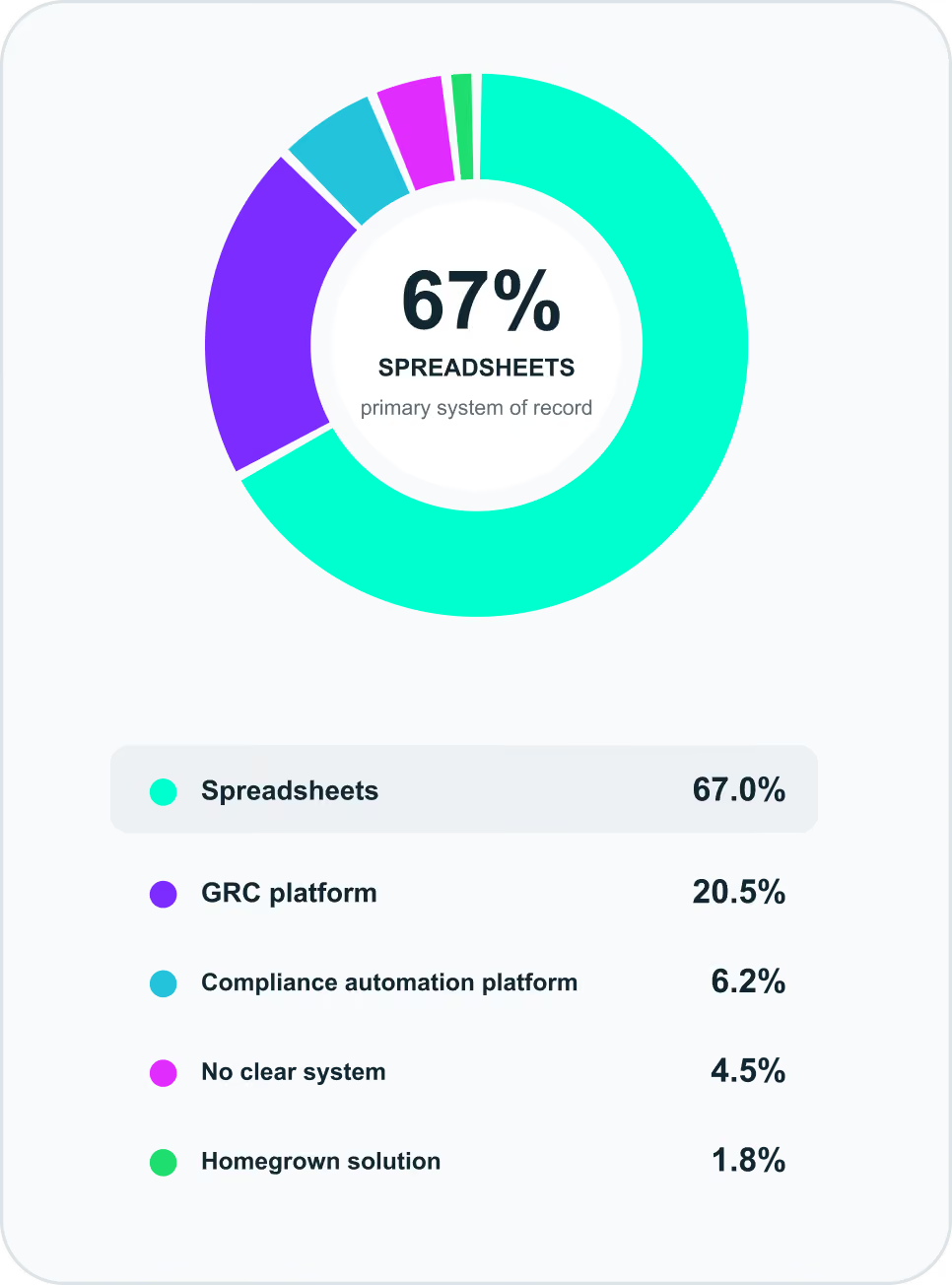
For many higher education institutions, compliance still depends heavily on spreadsheets and manual coordination. 67% use spreadsheets as their primary compliance system of record, while 61.6% say their teams spend more than half their time on manual compliance work.
As requirements expand across frameworks, departments, audits, and evidence sources, that administrative burden can make it harder for teams to focus on remediation, risk reduction, and strategic program improvement.
CONTINUOUS READINESS REMAINS THE EXCEPTION, NOT THE NORM
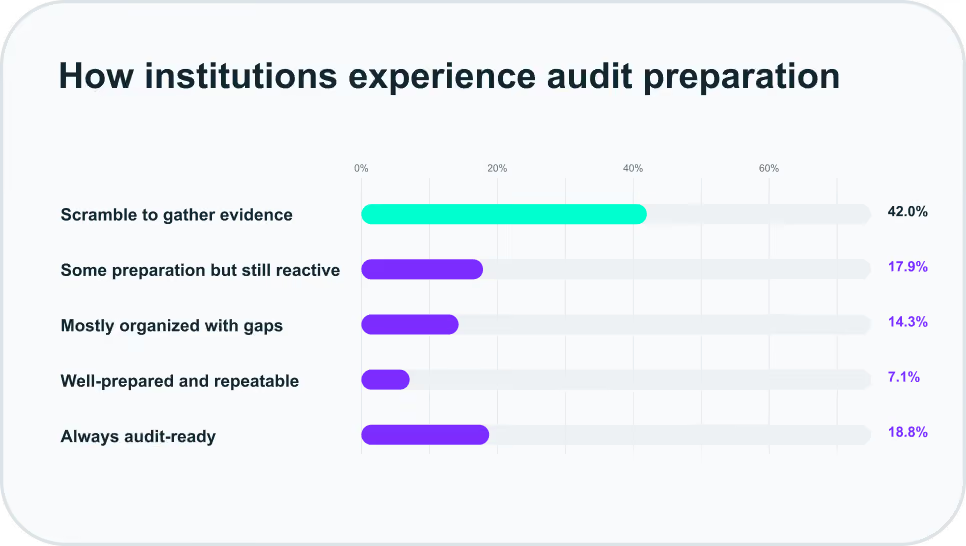
Despite growing compliance expectations, 63.4% of institutions describe their compliance processes as reactive or periodic. The same pattern appears when audits arrive: 42% say they scramble to gather evidence, while another 17.9% conduct some preparation but remain reactive.
Moving toward continuous readiness gives institutions more opportunity to maintain current evidence, identify gaps earlier, track remediation, and communicate progress before an audit or regulatory deadline forces action.
CLEAR OWNERSHIP, STANDARDIZED PROCESSES, AND GREATER VISIBILITY ARE LINKED TO LESS MANUAL WORK, BETTER AUDIT READINESS, AND GREATER CONFIDENCE
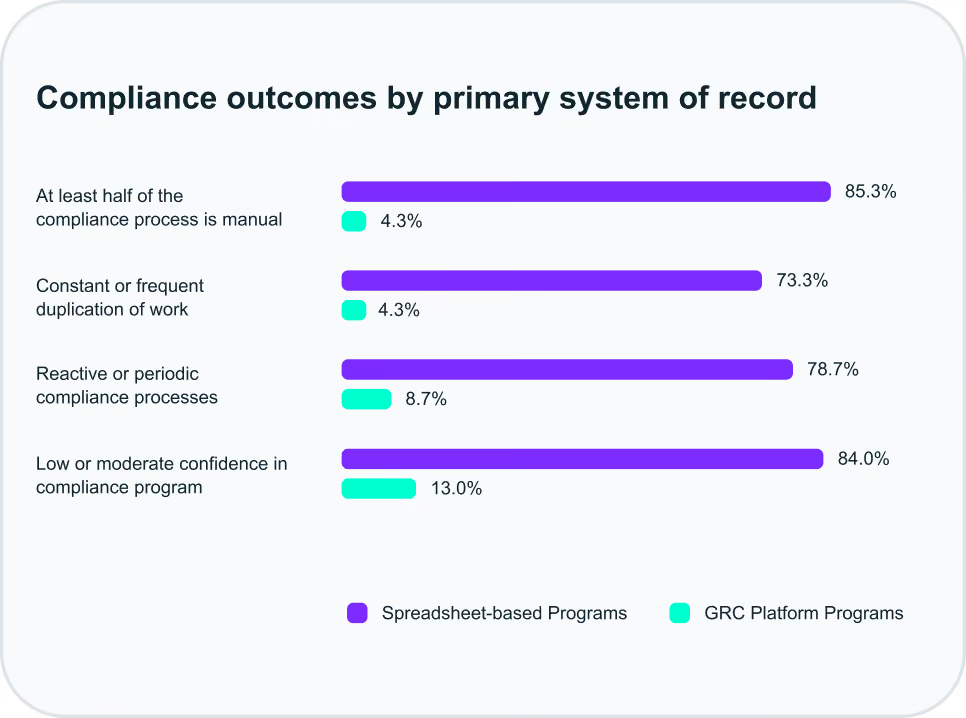
The research reveals a pronounced maturity divide. Institutions with clearer ownership, more standardized processes, stronger visibility, and more established operating models consistently report better compliance outcomes.
The differences are particularly striking when looking at the systems institutions use. Among spreadsheet-based programs, 85.3% report that at least half of the compliance process is manual and 78.7% operate reactively or periodically. Among institutions primarily using a GRC platform, those figures fall to 4.3% and 8.7%, respectively.
Technology isn't the only factor - but the research shows what becomes possible when governance, process, people, and technology work together.
See the complete benchmark for how colleges and universities are managing compliance today - including deeper findings on governance, framework complexity, manual work, audit readiness, technology, external support, budget expectations, and the approaches associated with stronger compliance performance.
Use the research to benchmark your institution, identify opportunities for improvement, and inform the next stage of your compliance strategy.

The research points to a clear opportunity: build compliance programs that are easier to coordinate, more visible, and better equipped to keep pace with growing requirements.
Since 2009, CampusGuard has guided higher education institutions through cybersecurity and compliance, interpreting regulatory requirements, assessing programs, preparing for audits, and strengthening strategy along the way.
Apptega provides the centralized compliance management platform to operationalize that work - bringing frameworks, controls, evidence, workflows, reporting, and progress into one place.
Together, CampusGuard and Apptega help institutions move from fragmented, point-in-time compliance toward a more connected and sustainable operating model.

Reuse controls, evidence, and compliance activities across overlapping requirements.

Automate repetitive workflows and give teams more time to focus on risk reduction and program improvement.

Keep evidence, controls, remediation, and documentation current throughout the year.

Create a clearer view of posture, gaps, progress, and priorities across the institution.

Give stakeholders a shared approach to ownership, workflows, evidence, and accountability.

Manage growing requirements without creating entirely separate processes for every framework.

Combine institutional ownership with higher education-specific compliance guidance and support.

Give leadership clearer reporting into compliance posture, risk, and improvement over time.


See how CampusGuard and Apptega can help your institution reduce administrative burden, improve audit readiness, strengthen visibility, and manage compliance continuously.